Western Grocer Serving the industry since 1916
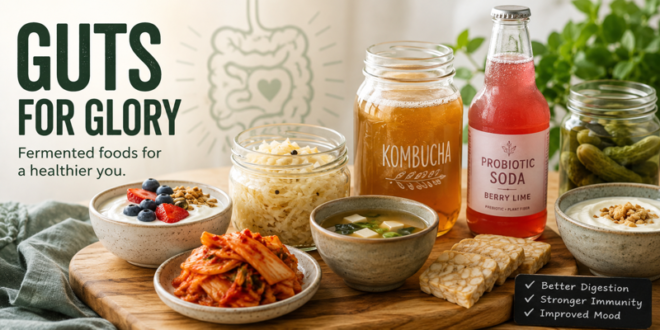
Fermented products are having a big moment as consumers see the holistic benefits of a healthy digestive system
By Carly Peters
In traditional Japanese culture, it’s believed the soul resides in the abdomen. In Ancient Egypt, digestive organs were considered sacred and preserved in jars. Today, a more modern take is that your gut is your second brain, impacting how you feel both physically and mentally. All accounts underscore the importance of the digestive system.
There is growing evidence that fermented foods can positively affect the gut microbiome, increasing immunity and mood, reducing inflammation, and playing a role in chronic disease prevention and weight management. Science has been paired with – or surpassed by – marketing. “This is your reminder to support your gut health,” as influencers down spoons of kimchi or chug kefir as part of what “I eat in a day for a healthy gut” trending social content.
All this is driving a boom in fermented foods, prebiotics, and probiotics. According to Innova Market Insights data, there has been a 42 per cent global rise in beverage and food launches with digestive claims. It also noted gut health was identified as the second leading industry trend behind “powerhouse protein.”
___
A survey by Activia revealed that 93 per cent of Canadians consider gut health in their food choices.
___
“We’re seeing some of the biggest growth in beverages, snacks, and everyday food categories – especially products that make wellness feel convenient and approachable,”
says Lynsey Walker, VP of Marketing & Communications, CHFA.
___
Walker points to functional beverages as a great example. Kombucha has been a staple in the category for quite some time, but brands like Gingerbug are experimenting with bold flavours, including spicy and botanical profiles, while companies like Happy Gut are bringing products like water kefir into more everyday beverage formats.
According to Grand View Research, North America’s kombucha market reached $2.1 billion in 2025. Canada represents roughly 15 per cent of the sales – around $315 million in 2025 – growing at 13–14 per cent annually. It’s also showing up in moments that used to belong exclusively to coffee, soda, or alcohol.
Functional sodas are also showing up in these areas of consumption, and are challenging kombucha for the top-contending, gut-health beverage. According to Grand View Research, in 2025, the Canadian prebiotic and probiotic soda market generated USD 20.7 million in sales and is projected to reach USD 37.0 million by 2030. Top brands like Poppi and Olipop are being touted for their gut-health, along with being lower in sugar compared to traditional sodas, making daily enjoyment and health benefits an easy sell.
There’s also a similar shift in snacks and convenient meal solutions. Walker points to B.C.-based company Crumblz, for using pulses to create meat-free protein products with prebiotic fibre, and Nuts for Cheese, which are incorporating fermentation into plant-based staples, making it easy for consumers to work those benefits into their everyday routines.
“What makes brands like this stand out is that they’re delivering functional benefits in formats that still feel fun, flavourful, and familiar,” says Walker. “That’s really what’s driving momentum across these categories. “
Interest in wellness, including gut health, isn’t going anywhere. What’s changing is how consumers make decisions, notes Walker, adding people are becoming much more intentional about what they buy; reading labels, comparing products, and looking for claims they can actually trust. “That means the opportunity today isn’t just about innovation – it’s about clarity and credibility. The brands that stand out will be the ones that make wellness feel easy to understand, relevant, and trusted to incorporate into everyday life.”
Survey Says
Last year, a first-of-its-kind network was launched to help Canadians better understand the health benefits of fermented foods and even make them part of national nutrition guidelines. The Canadian Fermented Foods Initiative (CFFI) brings together Canadian and European scientists, chefs, health professionals, and food producers to share research, recipes, and science-based expertise on fermented foods.
In one of their first reports, the group surveyed more than 4,000 Canadians about their knowledge and consumption of fermented foods:
- The report found fermented foods are already widely consumed. On average, Canadians regularly consume about 11 of the 18 most common fermented food types, which include yogurt, kefir, cheese, sour cream, miso, tempeh, soy sauce, other fermented soy-based products like gochujang, fermented vegetables (e.g., sauerkraut, kimchi), kombucha, vinegar, and fermented meats, fish, and fruits.
- Yogurt and cheese were the most commonly eaten, followed by foods such as soy sauce, sauerkraut, sour cream, and vinegar.
- Of those consuming fermented food, they did so mostly for taste rather than health.
- About two-thirds of Canadians said they would be open to trying new fermented foods, but taste and smell were cited as major barriers.
Trust Your Gut: How to help consumers navigate their wellness journey
A study by Activia noted that over half of Canadians want to improve their digestive health but don’t know where to begin.
This is where science-backed and credible education on digestive health becomes essential to help consumers make the right choices for their needs and navigate the sea of misinformation on gut health, explains Melisa Bayrav, senior brand manager with Activia Canada.
“Retailers are essential partners in helping consumers make informed and accurate choices about their digestive wellness,” she says, noting, for example, it’s a common misconception that all yogurts contain probiotics and that they are all made equal.
Brands can offer the science – Activa’s shopper campaign, the Activia Gut Health Challenge, for example, connected evidence-backed knowledge with simple, actionable habits – but retailers must make it understandable at the store level.
CHFA research shows that while many Canadians are open to brands’ wellness claims, only about 48 per cent say they somewhat trust them. Lynsey Walker, VP of Marketing & Communications with the association, says retailers can help close that gap by making products easier to navigate, whether that’s through clearer signage, organizing by benefit like gut health or immunity, or simple messaging that helps shoppers quickly understand what a product is for.
Reframing how products are presented and placed can also reduce barriers to understanding benefits and being put in baskets.
The team at The Noble Bean Team notes that tempeh often gets lost in the vegan bunker. To fix this, the brand is focusing on in-store education and staff advocacy.
“If we move the conversation from ‘meat alternative’ to ‘real fermented whole food,’ we can reach a much larger demographic,” they note. “We’d love to see retailers group tempeh with other ‘real food’ items like kimchi and sauerkraut. Even though we’re in the freezer, having signage or “shout-outs” near the refrigerated ferments helps bridge that gap and reminds customers we’re part of that same gut-health family.”
Along with a heavy emphasis on in-store demos – “It’s about moving from ‘What is this?’ to ‘I can cook this tonight’ in seconds” – Noble Bean is putting a major focus on retailer staff education.
“We want the people working the aisles to know exactly why tempeh is a gut-health powerhouse. When staff can confidently explain that it’s a whole-bean ferment, they become our best on-the-floor salespeople and better equipped to help customers with their gut-health needs.”
Get to Know Your Gut: Brands you should have on shelf
Activia
Arguably the most well-known, gut-healthy name in Canadian grocery, Activia yogurt is the #1 family doctor-recommended probiotic food and beverage brand., Made with real fruits and exclusive probiotics, Activia products are proudly prepared in Canada and serve as a source of other essential daily nutrients. Building on over 35 years of global science and experience, Activia is constantly driving innovation to support Canadians’ needs and benefits for their digestive health. Stay tuned for more to come from the brand in 2026.
The Noble Bean
Unlike ultra-processed plant proteins that are engineered in a lab, The Noble Bean’s tempeh is a traditional whole food. By fermenting the whole bean, all that natural fibre stays intact while the fermentation process makes the nutrients much easier for the body to absorb. It’s real food that actually does what it’s supposed to do.
The brand is currently in the R&D phase for a pre-marinated tempeh line, with flavours such as savoury Teriyaki. The goal is to keep a clean label while cutting down prep time for busy families.
Brightside Organics
Food is most nutritious when it is in its natural form. That’s why Brightside created Natura Fibre, an all-natural fibre boost that lets the wholefood and organic ingredients do what they do best – nourish the body. Made with the clean goodness of psyllium husk, ground flax, dandelion root, burdock root, and fenugreek seed, the blend boasts insoluble fibre, soluble fibre, and the added benefits of the herbs, for full gut health benefits.
Natura Fibre can also be easily mixed into everyday – whether in smoothie or on oatmeal, sprinkled on salads or soups, or baked right into homemade goods.