Western Grocer Serving the industry since 1916
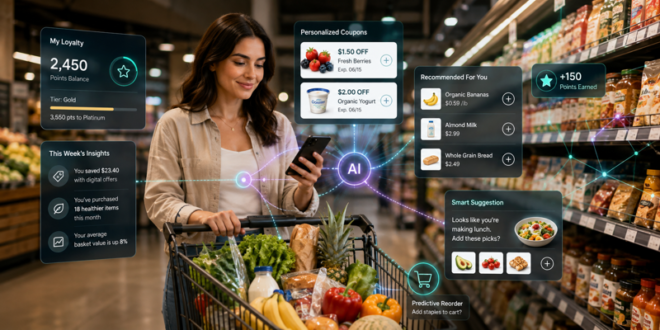
AI is not only helping the grocery industry with operational logistics. Today, AI is being used to dig deeper into loyalty programs through greater personalization. These programs use AI and machine learning to analyze individual purchase histories, app behavior, and real-time contextual data. This allows grocers to unify in-store and online shopping records to deliver tailored promotions, dynamic digital coupons, and interactive gamified challenges to increase basket sizes and customer retention.
Loyalty members who redeem personalized offers generate significantly higher customer lifetime value, spending 4.3 times more annually than those who do not.
Programs build comprehensive profiles of shoppers by pulling data from multiple touchpoints such as Items added to digital carts, past online browsing history and in-store transactions via a loyalty card at physical checkouts. AI then evaluates profiles against hundreds of decision points to understand unique purchasing patterns.
What is truly amazing is that the algorithms can predict when a customer will likely run out of staples and automatically issue a coupon for that exact product right before your next trip. Systems can even blend a shopper’s history with real-time variables like local weather, season, or local events to suggest relevant meal ingredients.
According to McKinsey’s 2026 State of Grocery Retail North America report, more than 80% of grocers view loyalty programs as a primary engine of value delivery. The report also found that grocers say 35% of promotions are fully personalized today and expect that figure to increase to 55% in the next two to three years.
For many retailers, personalization means grouping customers into broad segments based on past purchases, demographics or general shopping behavior. But as more focus is put on targeted promotions and loyalty-led value, grocers may need to address a major gap in how personalization is defined and delivered.
Consumers are constantly weighing trade-offs across cost, convenience, quality and relevance, which means grocers need to deliver value in ways that reflect how individual shoppers are actually shopping, which is shorter, more frequent and more mission-based trips. Value is becoming less about individual levers like price cuts, promotions or loyalty points and more about how pricing, promotions, loyalty and personalization work together as one connected customer experience.